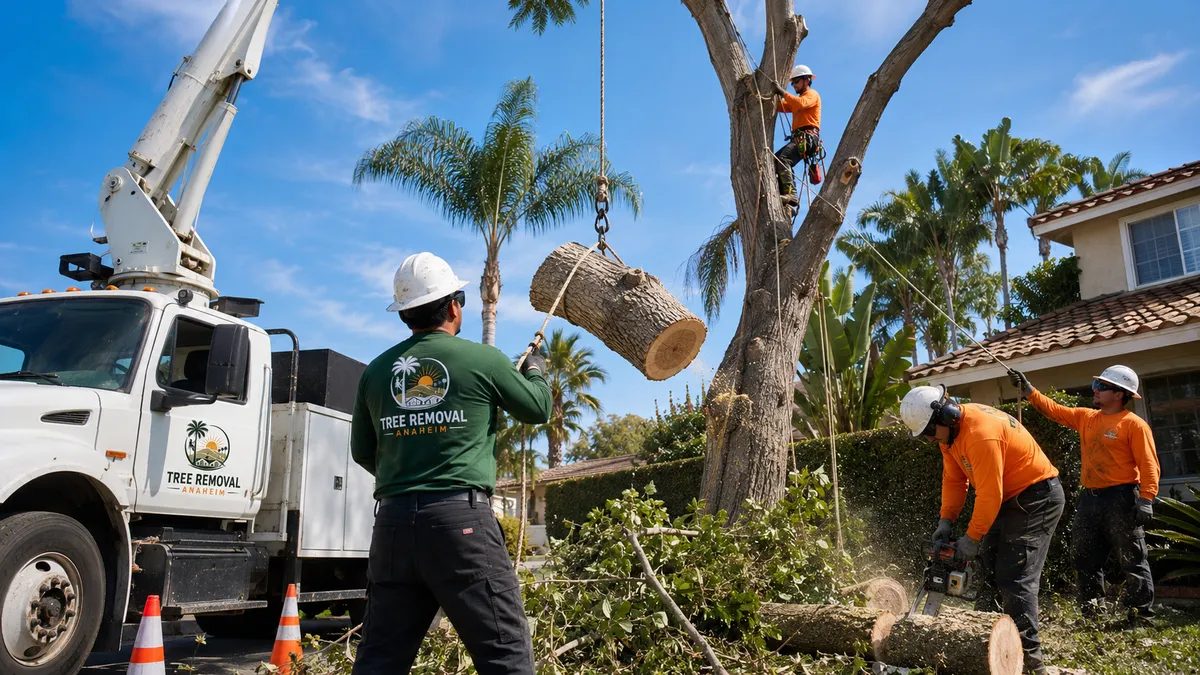
Remove severely declining trees with care
Dead and Diseased Tree Removal
Have a declining tree evaluated before more structure is lost. Get a Free Estimate
Removal for Trees That Have Lost Too Much Vitality
A dead or severely declining tree changes over time. Branches become brittle, decay can spread through stems and trunk wood, bark may loosen, and the tree can become less suitable for ordinary climbing or rigging. Waiting does not always make a removal impossible, but continued deterioration can reduce the number of safe and efficient options available.
We remove dead and disease-affected trees when decline has progressed to the point that keeping the tree no longer makes practical sense. Our evaluation focuses on visible condition, remaining live canopy, deadwood distribution, trunk integrity, root-zone concerns, nearby targets, and how much sound structure is available for the removal itself.
Tree Removal Service Areas Near Anaheim
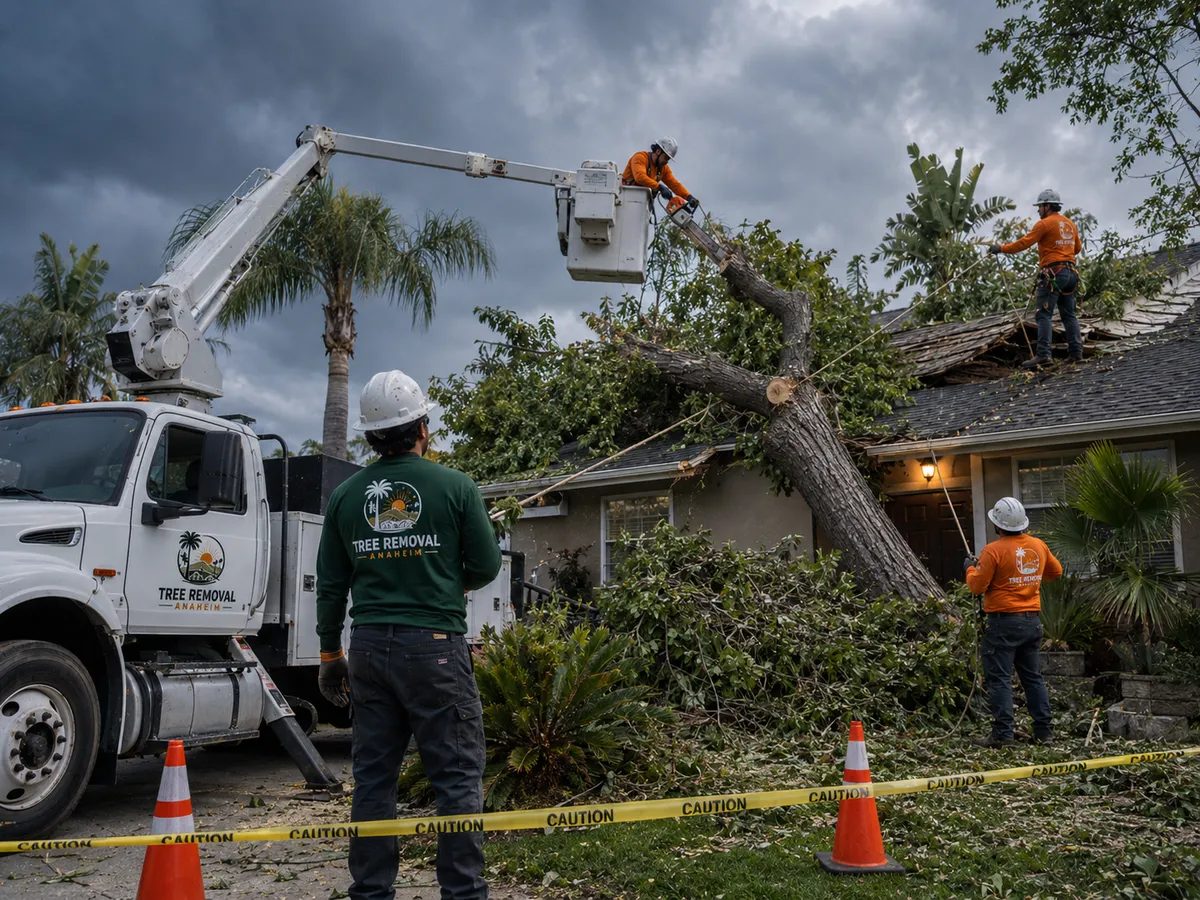
Why Condition Changes the Removal Method
Healthy wood is usually more predictable under climbing and rigging loads than severely decayed or dead material. Once a tree has been declining for a long time, branches may break with little warning and internal deterioration may not be obvious from the ground. A dead tree therefore needs a different approach from a vigorous tree of the same size. Depending on condition, the crew may reduce piece size, avoid loading questionable limbs, work from aerial equipment, or consider crane assistance. We also pay attention to nearby trees and landscaping when disease is suspected, although tree removal by itself does not diagnose or treat every plant-health problem. When the cause of decline is uncertain, we are careful not to overstate what can be determined from a removal estimate alone.
Completely dead trees
Trees with no remaining live canopy can continue losing branches and structural strength. Earlier removal often leaves more options for controlled access.
Severely declining trees
A tree with extensive dieback may still have living portions while losing overall structural reliability. We look at whether the decline is concentrated or widespread.
Decay-affected trunks
Cavities, soft areas, fungal growth, and other decay indicators may affect how much loading the trunk can safely carry during removal.
Brittle deadwood
Dead limbs can break during setup, climbing, or rigging. We identify overhead deadwood before placing people or equipment beneath it.
Disease-related removals
When disease or severe decline has left a tree beyond reasonable retention, we plan removal around its current structural condition and the surrounding property.
A useful estimate is based on the actual tree and site rather than a generic price table. The main cost factors include:
Remaining structural strength
Dead, decayed or brittle wood may limit ordinary climbing, tie-in points and rigging choices.
Tree size and position
Height, trunk diameter and proximity to buildings or other targets affect the dismantling sequence.
Access requirements
Aerial lifts, cranes or other equipment may be considered when the tree cannot be safely worked from within.
Debris volume and handling
Brittle branches, trunk sections and cleanup requirements influence the overall scope of the job.
Photos showing the whole tree, the base, access route and nearby structures can help make the first estimate conversation more useful.
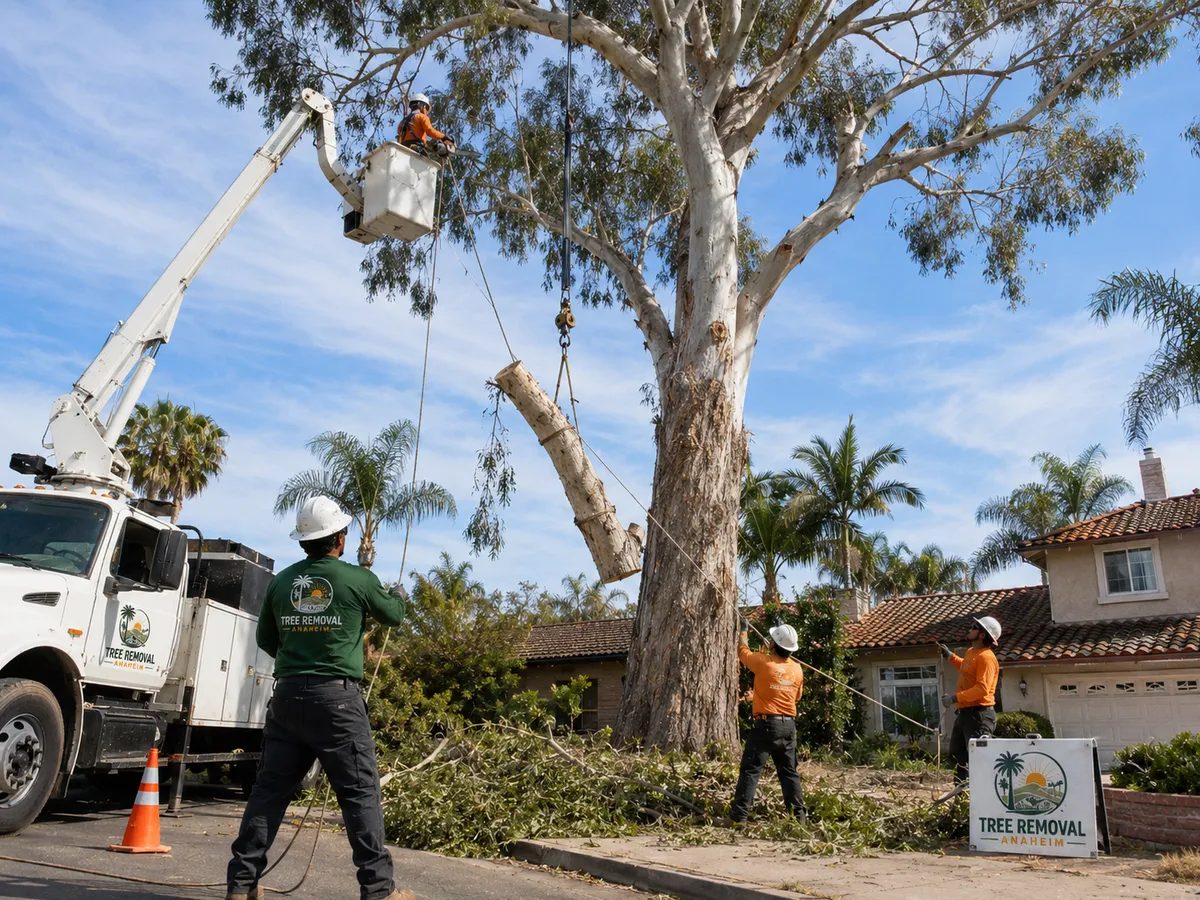
Dead & Diseased Tree Removal Planning Priorities
Condition-first planning
We consider how much reliable structure remains before deciding where ropes, climbers, equipment, or lifting forces can safely be placed.
Smaller controlled sections
Brittle or compromised material may be removed in reduced piece sizes to limit shock loading and unpredictable breakage.
Alternate access when needed
When the trunk or crown is not suitable for ordinary climbing, we consider equipment-based access or crane assistance.
No exaggerated diagnosis
We explain visible decline and removal concerns clearly without pretending that every symptom can be conclusively diagnosed during a removal estimate.
Contact Us Today for a Free Estimate
If a tree is dead, rapidly declining, brittle, or showing major decay, get it looked at while removal options are still available.
Free — no obligations
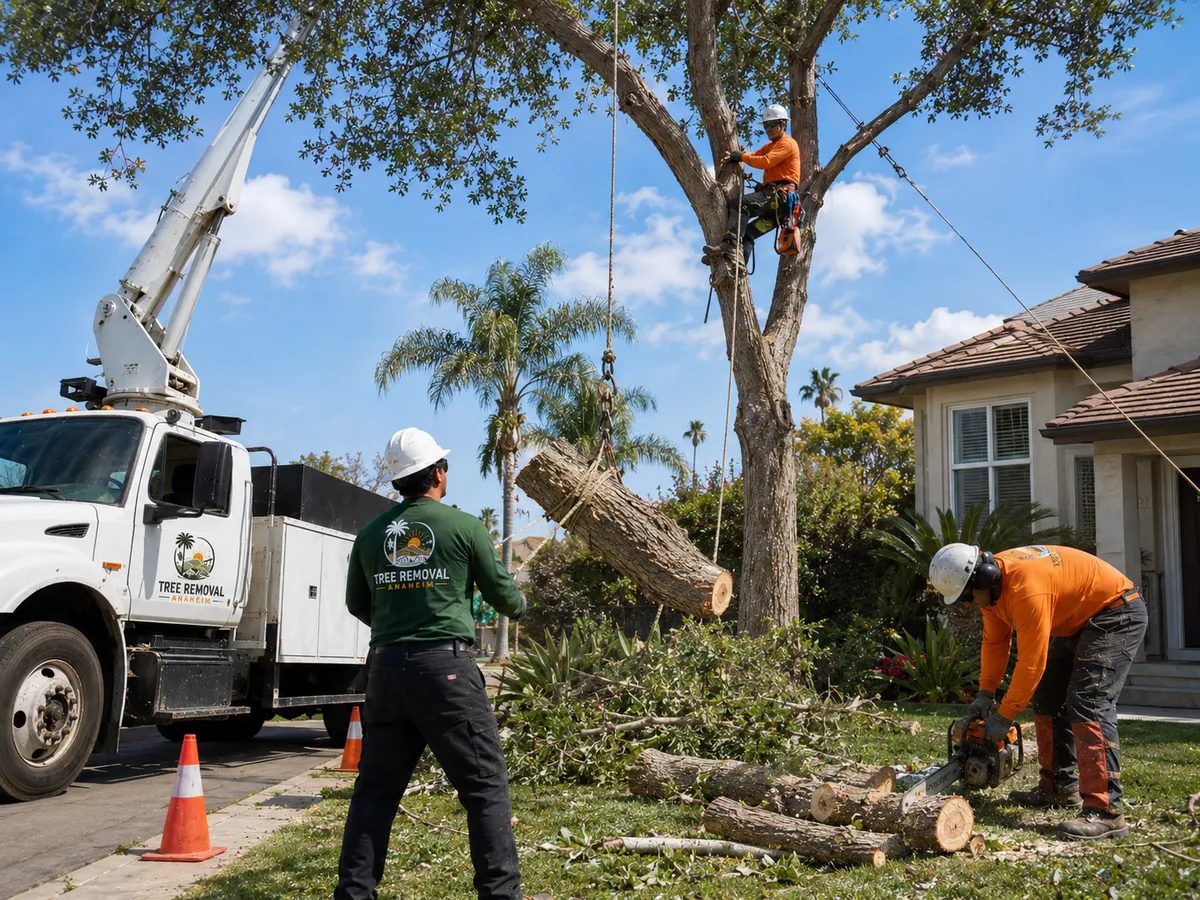
Our Dead and Diseased Tree Removal Process
Assess visible deterioration
We look at canopy dieback, dead limbs, trunk condition, cavities, bark loss, root-zone concerns, and nearby property.
Decide how the tree can be accessed
The remaining structural condition determines whether climbing, aerial equipment, rigging, or lifting support is most appropriate.
Remove compromised material
Dead and weakened sections are handled carefully so the removal does not rely unnecessarily on brittle or decayed wood.
Complete cleanup
Material is processed and cleared according to the agreed scope, with the immediate work area reviewed before completion.