Help for urgent tree hazards
Emergency Tree Removal in Anaheim
For an urgent tree problem, call (657) 467-7902 and describe what happened. Call (657) 467-7902
When a Tree Failure Cannot Wait
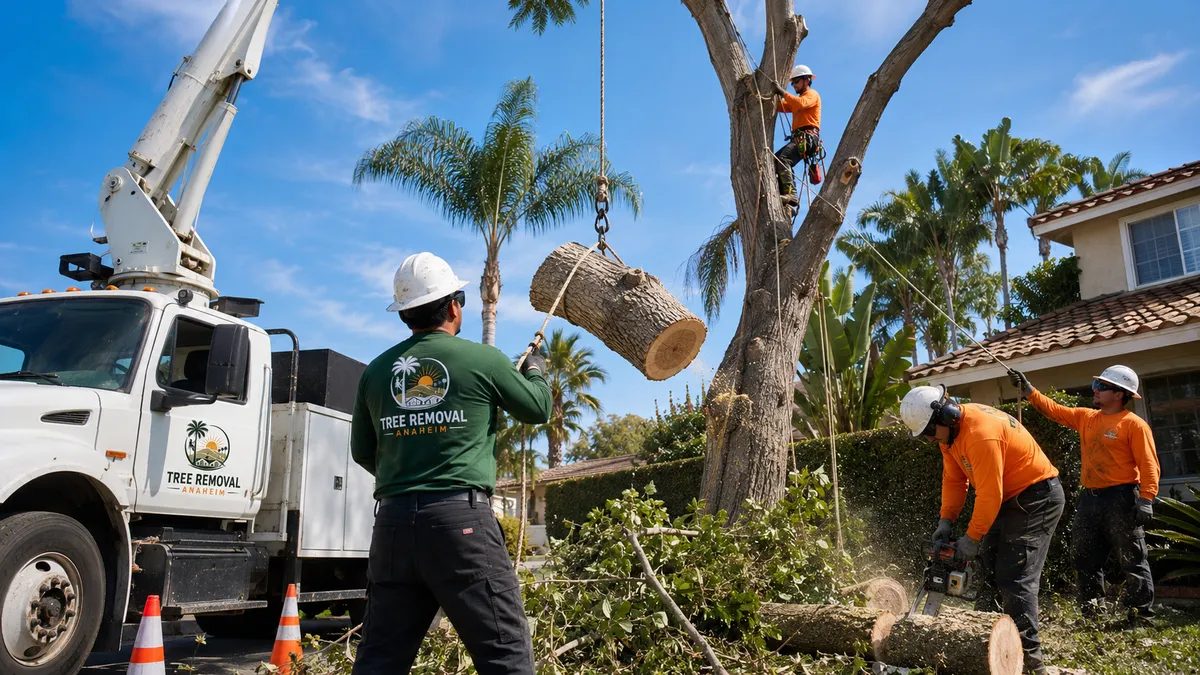
A tree emergency can develop suddenly after wind, saturated soil, branch failure, trunk splitting, root movement, vehicle impact, or the collapse of an already weakened tree. When a tree has fallen or appears unstable, the first priority is keeping people away from the danger area. Do not stand beneath suspended limbs or attempt to move material that is under tension.
Our emergency tree removal work focuses on stabilizing the situation and developing a controlled way to remove failed or threatening material. We look at what has moved, what remains attached, what the tree is resting on, whether structures are involved, and whether utilities may be affected. If electrical lines or utility infrastructure are involved, contact the appropriate utility or emergency authority before approaching the area.
Tree Removal Service Areas Near Anaheim
Urgent Removal Starts With Hazard Control
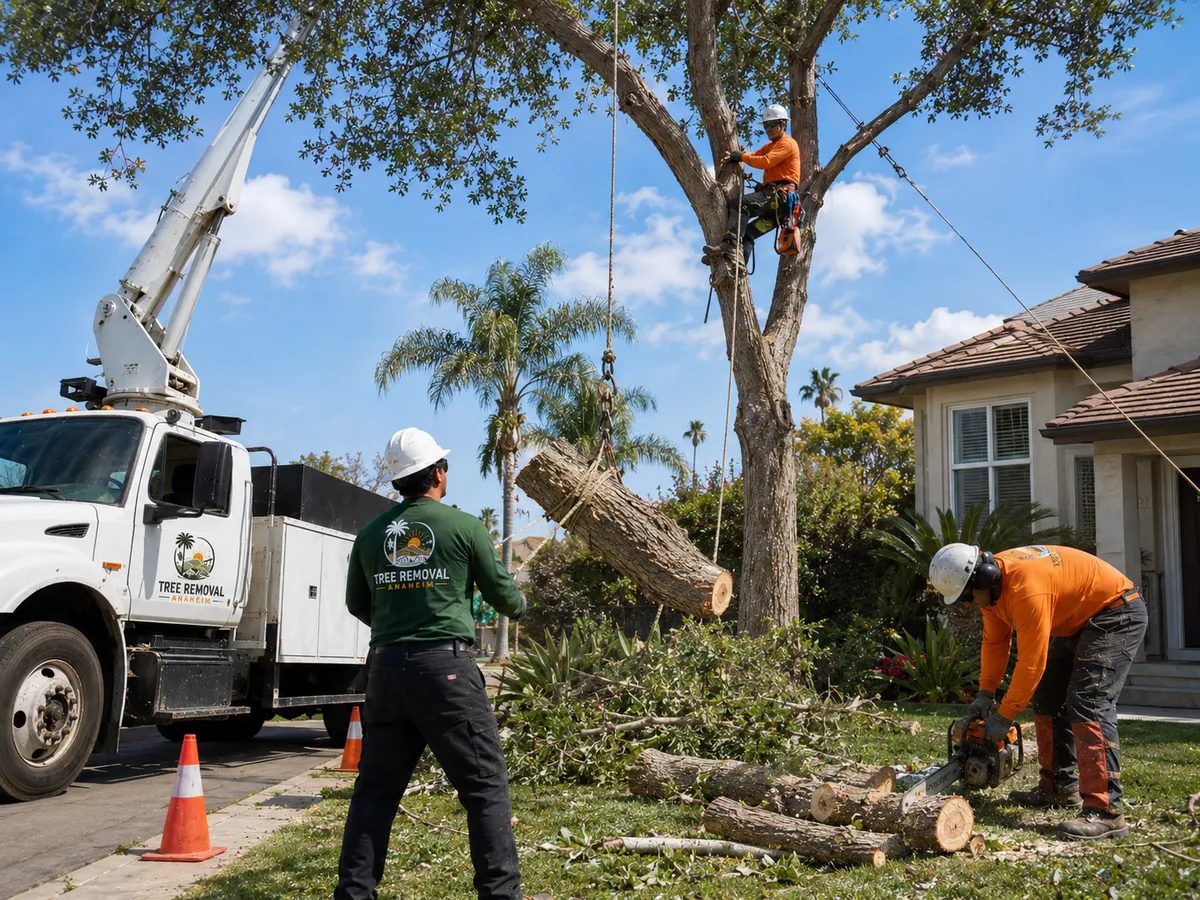
Emergency tree work is different from a routine removal because the tree may no longer be carrying weight in predictable ways. A split trunk, partially uprooted root plate, hung branch, or tree lying against a structure can contain compression and tension forces that shift as cuts are made. That makes careful sequencing especially important. We assess safe access first. From there, the crew determines whether pieces can be removed using normal rigging, mechanical assistance, or crane support. In some situations, only the immediately hazardous material needs to be addressed first, with secondary cleanup completed once the site is stable. We explain what we can safely tackle and what conditions may require coordination with utilities, public agencies, neighboring property owners, or other parties.
Fallen trees
Trees that have landed on yards, driveways, structures, walls, or other property can be under significant stored force. We plan cuts around how the trunk and limbs are supported.
Split trunks
A major trunk or union split can create an immediate risk of additional failure. We evaluate whether the remaining structure can be accessed safely and how its weight should be released.
Partially uprooted trees
Root plate movement can leave a tree leaning or suspended in an unstable position. These removals require attention to both the canopy and the shifting root mass.
Storm-damaged canopies
Large broken limbs may remain hung in the canopy even when the main trunk is standing. We identify suspended and cracked material before work begins below.
Trees blocking access
A failed tree across a driveway, gate, or private access route may need priority clearing. We focus first on making the immediate hazard manageable without rushing unsafe cuts.
A useful estimate is based on the actual tree and site rather than a generic price table. The main cost factors include:
Immediate hazard
A fallen, split or partially uprooted tree may require a different sequence from a stable tree scheduled in advance.
Tree stability
Failed roots, broken stems and hanging limbs can limit where the crew can safely stand, climb or rig.
Access and surroundings
Blocked driveways, buildings, vehicles, utilities and restricted access can affect equipment choice and setup.
Material handling
Large failed limbs and trunk sections may need controlled movement before the area can be cleared.
Photos showing the whole tree, the base, access route and nearby structures can help make the first estimate conversation more useful.
Emergency Tree Removal Planning Priorities
Safety before speed
Urgent does not mean uncontrolled. We start by identifying unstable material, pressure points, access limits, and nearby hazards before cutting.
Failed-tree considerations
Our removal-focused crew plans around split stems, hung limbs, partial uprooting, and trees that are resting on structures or other objects.
Flexible equipment planning
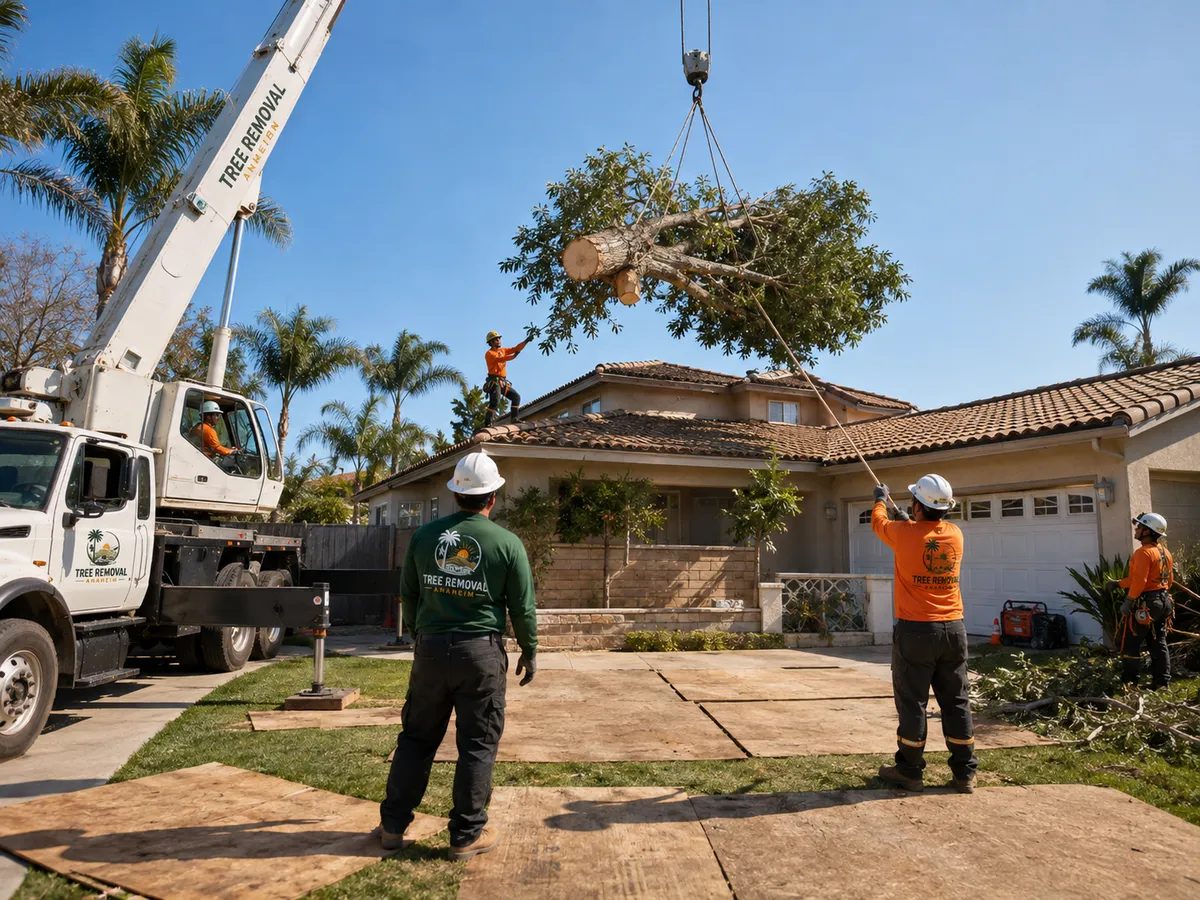
Depending on the site, an emergency may call for rigging, mechanical equipment, or crane assistance rather than a conventional removal sequence.
Clear next steps
We explain what needs immediate attention, what can wait until the site is stable, and where outside coordination may be necessary.
Contact Us Today for a Free Estimate
If a tree has fallen, split, uprooted, or become dangerously unstable, call (657) 467-7902 with the location and immediate conditions.
Free — no obligations
Our Emergency Removal Process
Confirm the immediate hazard
We gather information about what failed, where it landed, what remains suspended, and whether people, structures, utilities, or access are affected.
Establish a safer work zone
The crew identifies where movement could occur and keeps unnecessary people and equipment outside that area.
Remove unstable material in sequence
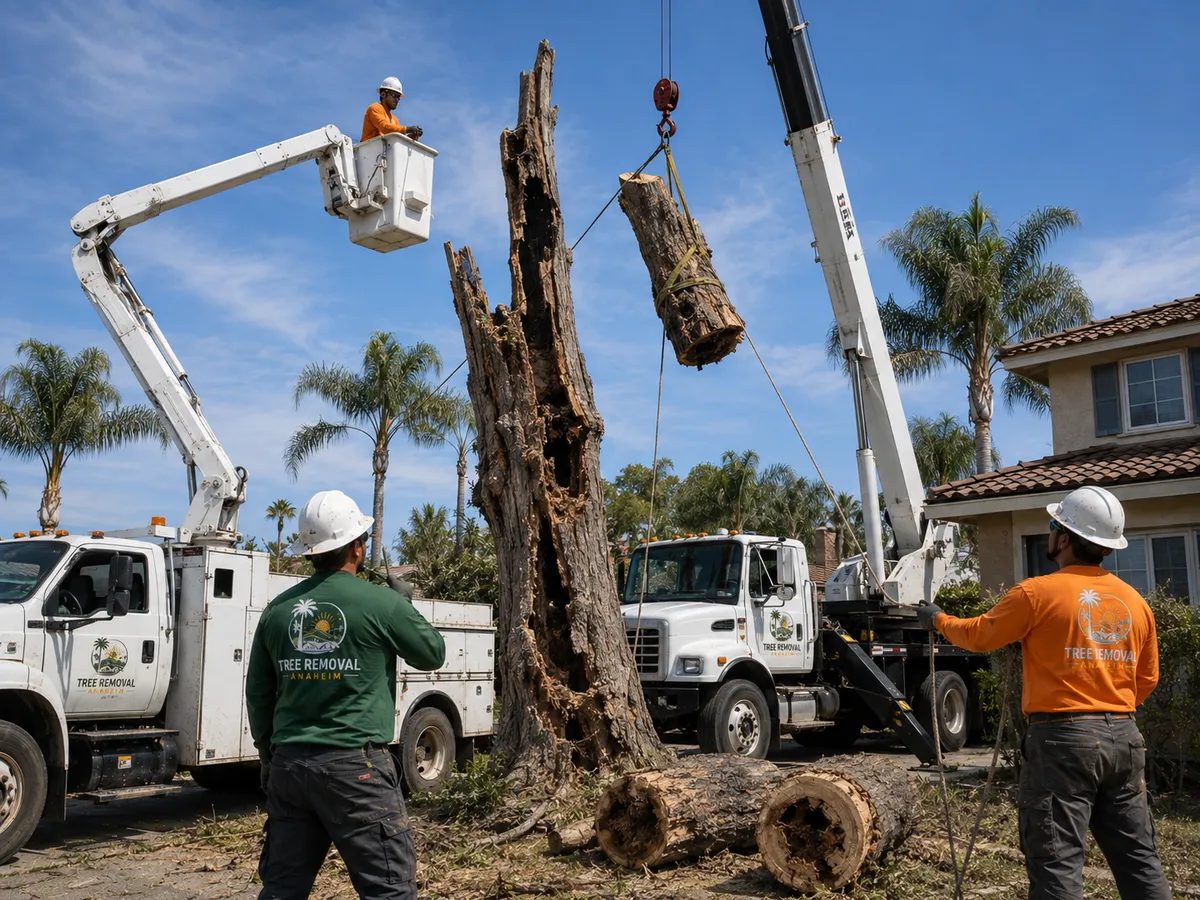
Cuts and lifts are planned around the load the tree is carrying so weight is released in a controlled order.
Clear and reassess
Once the immediate hazard is reduced, we reassess the remaining tree material and complete the agreed cleanup or follow-up work.